
Spirometry
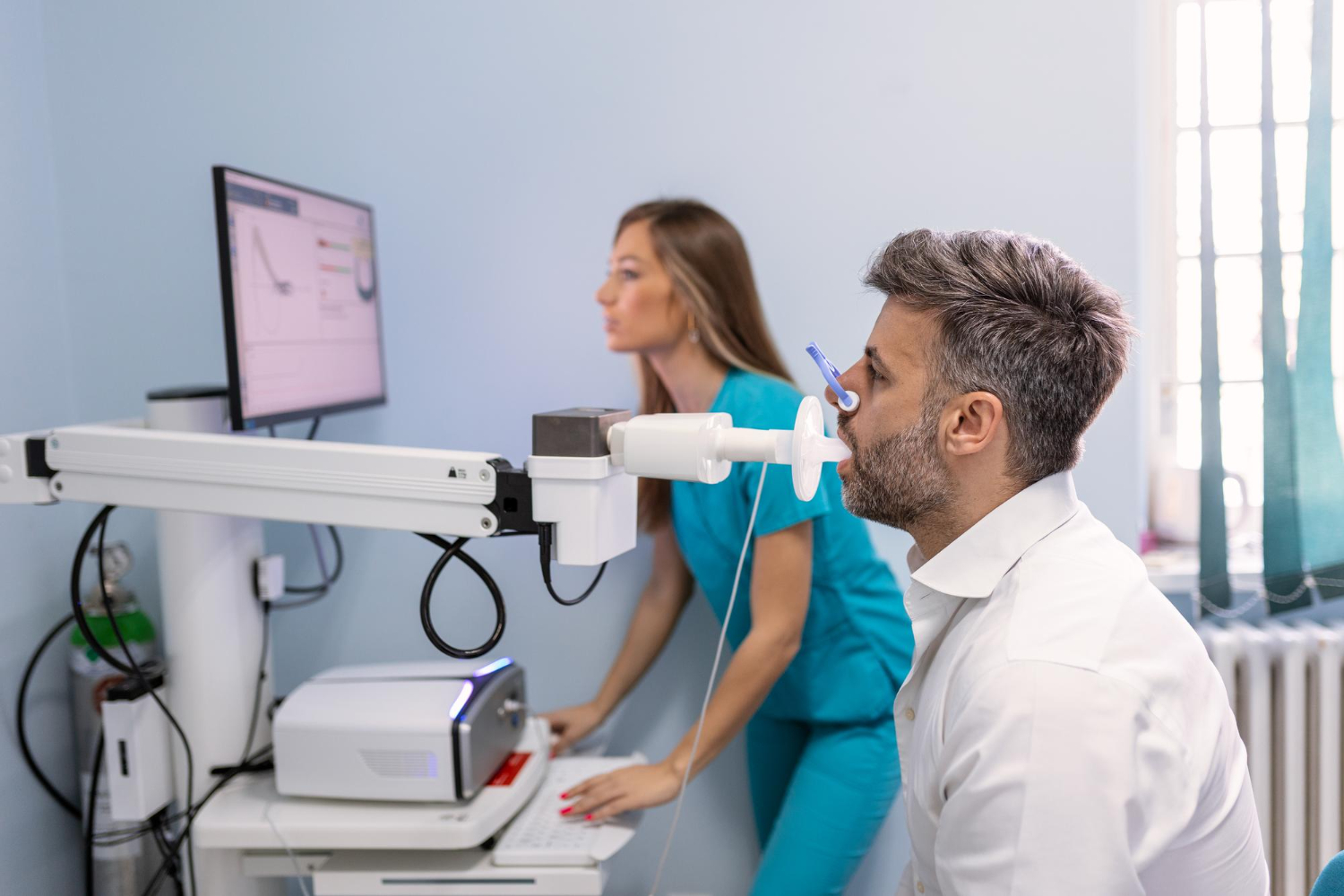
Assessing Lung Function and Breathing Capacity
Spirometry is a pulmonary function test that measures how much air a person can breathe in and out and how quickly they can exhale. It helps doctors evaluate lung function and identify airflow limitations that may be associated with respiratory conditions.
The test is commonly used in the assessment of breathing difficulties, persistent cough, wheezing and other respiratory symptoms. It may also be recommended to monitor patients with known lung conditions and evaluate changes in breathing capacity over time.
At Life Diagnostic Centre, spirometry testing supports medical assessment by providing useful information about a patient’s respiratory function.
Why Is Spirometry Important?
Breathing problems can occur for several reasons, and spirometry helps measure airflow and lung capacity. It can support the evaluation of conditions such as asthma and chronic obstructive pulmonary disease (COPD).
A doctor may recommend spirometry for:
Persistent cough.
Wheezing or noisy breathing.
Shortness of breath.
Chest tightness associated with breathing.
Assessment of suspected asthma or COPD.
Monitoring of known respiratory conditions.
Evaluation of lung function when clinically required.
How Is the Spirometry Test Performed?
Spirometry is generally a simple, non-invasive procedure. The patient is asked to sit comfortably and breathe through a mouthpiece connected to a spirometer. A nose clip may be used to ensure that air passes through the mouthpiece.
The patient will be guided to take a deep breath and then blow out as forcefully and completely as possible.
The test may involve:
Sitting comfortably in the recommended position.
Placing the mouthpiece securely between the lips.
Taking a deep breath.
Blowing out firmly as instructed.
Repeating the manoeuvre as required for reliable readings.
Preparation Before Testing
Patients should follow the instructions provided by the doctor or diagnostic team. Depending on the clinical situation, they may be advised about smoking, heavy meals, physical activity or certain inhaled medications before the test. Medication should not be stopped without medical guidance.
Understanding Spirometry Results
Spirometry measures values such as forced vital capacity (FVC) and forced expiratory volume in one second (FEV1). These measurements help doctors assess airflow and lung function.
Results are interpreted according to age, height, clinical history and other relevant factors. Spirometry supports diagnosis but should be considered alongside symptoms and other medical findings.
Life Diagnostic Centre aims to support respiratory health evaluation through accessible diagnostic testing and patient-focused care.
Other Services
Take the First Step Towards Better Health
Get reliable diagnostic care and medical guidance under one roof.